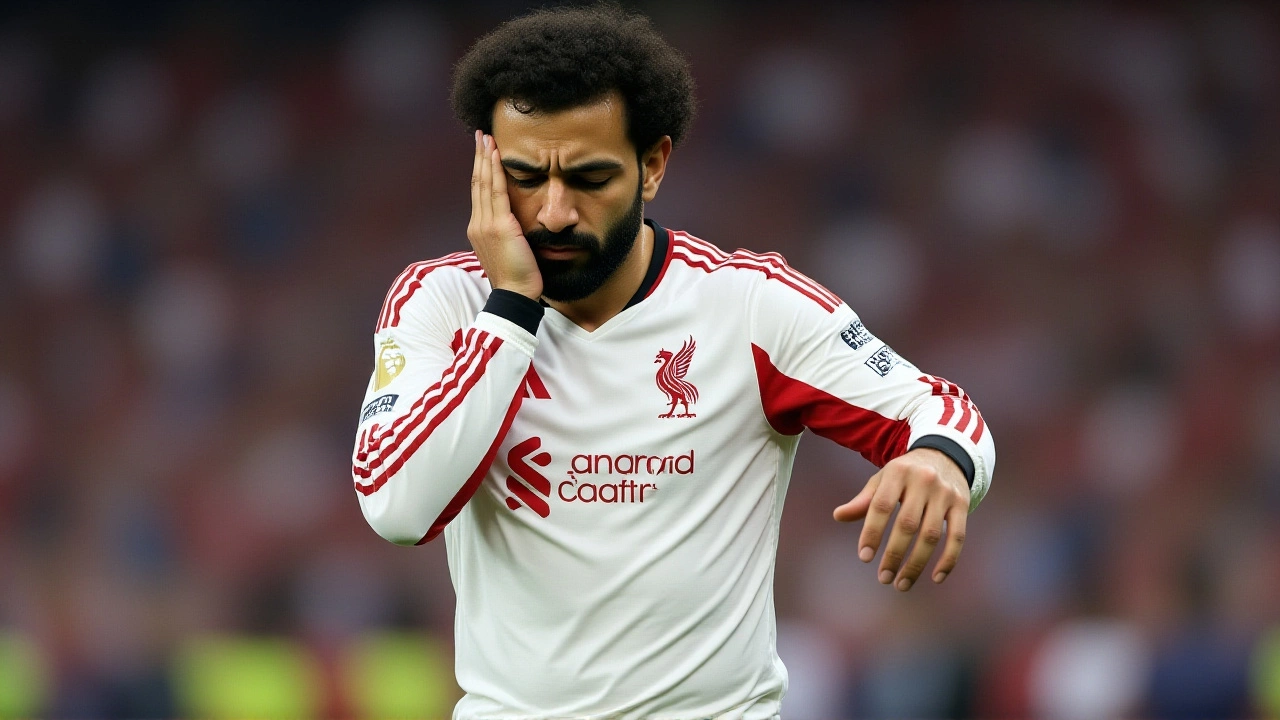
When Mohamed Salah, the Egyptian superstar and long-time talisman of Liverpool FC, took to social media after a defeat to Aston Villa, he didn't just offer an apology. He delivered a scathing indictment of the club’s current direction, describing the team as "crumbling" and demanding a return to the "heavy metal football" identity that defined their most successful era.
The comments, posted on Instagram with just one match reportedly left in his tenure at the club, have ignited a firestorm across Merseyside. This isn't merely post-match frustration; it reads like a parting shot aimed squarely at manager Arne Slot, whose tactical approach is now under intense scrutiny from fans and pundits alike.
The 'Heavy Metal' Demand
Here’s the thing: Salah didn’t mince words. In a message that Sports Illustrated described as a "ruthless takedown," the forward explicitly linked recent failures to a loss of identity. "Us crumbling to yet another defeat this season was very painful and not what our fans deserve," he wrote. But the real sting came in his prescription for recovery.
He wants Liverpool to go back to being "the heavy metal attacking team that opponents fear." That phrase—coined during Jürgen Klopp’s reign to describe the high-intensity, relentless pressing style—is central to Salah’s argument. He insists this isn't optional. "It cannot be negotiable and everyone that joins this club should adapt to it," he stated. The implication is clear: if the current setup doesn't fit that mold, it needs to change. Period.
Turns out, Salah views occasional victories as insufficient. "Winning some games here and there is not what Liverpool should be about," he added. For a player who has been the face of the club’s trophy-laden years, this rejection of mediocrity carries significant weight. It suggests that the gap between expectation and reality has become too wide to ignore.
The Slot Factor
But wait—who is really the target here? While Salah never named Arne Slot directly in his post, the subtext is undeniable. FotMob reported that Salah has "seemingly suggested" Slot’s approach does not align with the "heavy metal" ethos. Slot, who took over from Klopp, has faced criticism for a more structured, less chaotic style of play. Some supporters argue this has neutered Liverpool’s attacking threat.
The tension escalated when Slot addressed the media. According to reports cited by YouTube channels like Anfield Agenda, the Dutch manager acknowledged Salah’s immense talent but offered a surprisingly sharp critique in return. Slot hinted that a "dip in form might be bruising the player's ego." It’s a delicate dance: praising the star while subtly questioning his mindset. Slot also looked ahead, suggesting that the summer transfer window—with its "fresh mentalities and fresh faces"—would ultimately prove who was right in this "high-stakes situation."
This exchange has divided opinion across Merseyside. Is Salah a loyalist demanding standards be upheld? Or is he a disgruntled veteran unable to adapt to new management? The debate is raging in pubs and online forums alike.
A Turbulent Campaign
To understand the gravity of Salah’s outburst, you have to look at the broader context. Liverpool’s campaign has been described as "deeply turbulent." After years of Champions League dominance and Premier League challenges, the team has struggled to find consistency under Slot. The defeat to Aston Villa wasn’t just a loss; it felt symbolic of a larger malaise.
Journalist Simon Hughes reported that Salah hasn’t entirely closed the door on staying at Anfield. However, there’s a monumental caveat: a "complete regime change." Specifically, Hughes claims Salah would demand the departure of head coach Arne Slot. If true, this raises serious questions about the club’s hierarchy. Can a player dictate managerial appointments? And if so, what precedent does that set?
The details are still unclear, but the stakes couldn’t be higher. With Salah potentially leaving, Liverpool faces a dual crisis: losing their best player and possibly their manager. The summer of 2025 could see a complete overhaul of the project.
What's Next for Anfield?
The immediate future is uncertain. Salah’s final match looms large, but the narrative has shifted from football to drama. Fans are asking whether they can trust the club’s leadership to restore the "heavy metal" identity or if they need to start anew. Slot’s job security appears fragile, especially if results don’t improve before the season ends.
Meanwhile, other clubs will be watching closely. A free agent Salah, combined with a potential managerial vacancy, makes Liverpool a prime target for rivals. The ripple effects extend beyond the pitch, impacting ticket sales, merchandise, and global brand value. This isn't just about tactics; it's about the soul of the club.
Frequently Asked Questions
What did Mohamed Salah mean by 'heavy metal football'?
Salah used the term to refer to the high-intensity, aggressive, and relentless pressing style popularized under former manager Jürgen Klopp. He believes this identity is essential for winning trophies and fears Liverpool has abandoned it under Arne Slot.
Is Arne Slot likely to leave Liverpool?
While no official decision has been made, reports suggest Salah would only stay if Slot departs. Given Salah’s influence and the team’s poor form, Slot’s position is increasingly precarious ahead of the summer transfer window.
Why is Salah calling the club 'crumbling'?
Salah described the club as "crumbling" following a string of defeats, including the loss to Aston Villa. He expressed pain over the team’s inability to perform consistently and felt the current standard does not respect the fans’ expectations.
Will Mohamed Salah leave Liverpool at the end of the season?
It is highly probable. Reports indicate he has one match left and may require a managerial change to stay. If Slot remains, Salah is expected to depart, likely as a free agent, given the public nature of his criticism.